Thursday, August 1, 2013

Obama's war on free information


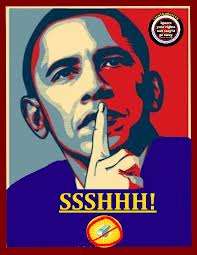
Obama, who once spoke so glowingly of the value of whistleblowers and a free press in a democracy, has turned out to be the most secretive president in modern times. His war on journalists and whistleblowers is an all-out campaign against freedom of information.

Demonizing Edward Snowden, smashing Bradley Manning: the war on whistleblowers and a war on the press


Obama spoke about his desire for transparency and its importance in a democracy early on, but his has been the most secretive presidency in recent times. It has classified many more documents than Bush's adminsistration has -- so many, that everything is a secret now, and revealing any information is to breach "security." To heighten the effect, four million people have security clearances. Something has to give. The Obama administration is much more tight lipped and hostile to the press than Bush's was. Most notably of all, it has evoked the 1917 World War I Espionage Act to to prosecute Americans twice as often as all other previous American administrations put together. In general, the mainstream media has been eager to go along, demonizing Edward Snowden and virtually ignoring the burying of Private Bradley Manning, who was held in solitary confinement for three years without trial, a hunk of it naked. A New Yorker writer in a blog Jeffrey Toobin, was quick to get the Snowded-smearing bandwagon rolling, calling him a "grandiose narcissist." Even pro-left Nation film critic Stuart Klawans published a review in the New York Times dismissing Robert Greenwald's documentary, War on Whistleblowers, as a "Bar Mitzvah video"; others too have criticized this film as not fully sounding the alarm (because under an hour long), slipshod, or too sensationalist. But Greenwald did sound the alarm. So have many others. But what Greenwald does is merely provide a quick outline of whistleblowers and show how they are being prosecuted. We need such outlines, because there are going to be more Snowdens and Mannings and more prosecutions.
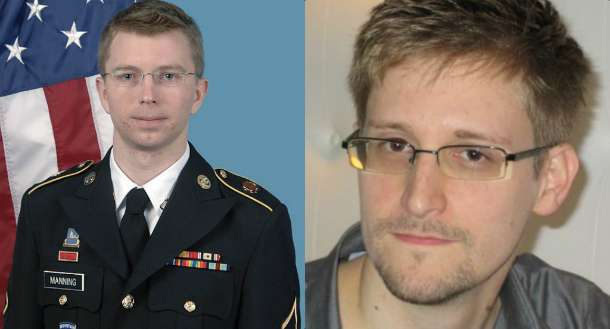

Manning and Snowden


A whistleblower is nothing like a spy

Whistleblowers are being charged with espionage over and over nowadays. But this is propaganda and intimidation. The important thing is to see the differences between a spy and a whistleblower. A spy traditionally works for a foreign power; he or she gathers secrets from another country and is paid for it. None of the American whistleblowers have done that. A spy steals secrets. The US government, the NSA particularly, does that all the time, but does not sell them; it keeps them for itself, enormous volumes of them it turns out, with minimal positive results but an invasion of everyone's privacy. Whistleblowers customarily have acquired the information they reveal legitimately, in the course of their work. Manning and Snowden revealed only information they were already given access to in their jobs. Whistleblowers usually are troubled by things they find are going on -- that their government is doing in our name. They inform their superiors of their concerns. They are brushed off, and when they, repeatedly, try to go through channels, they must choose either to slink away and say nothing, or to go public. They do not give their information to "the enemy" -- unless you, like, apparently, the Obama administration, regard the press in that light -- but to the public.

The effort to demonize Julian Assange is part and parcel of the effort to demonize whistleblowers, only the method has differed. He has been defamed, threatened with charges of sexual misconduct in Sweden, and accused of being a sensationalist, not a journalist. The government doesn't know how to regard Assange, because he is a new animal, a hactivist turned conduit for whistleblowers.

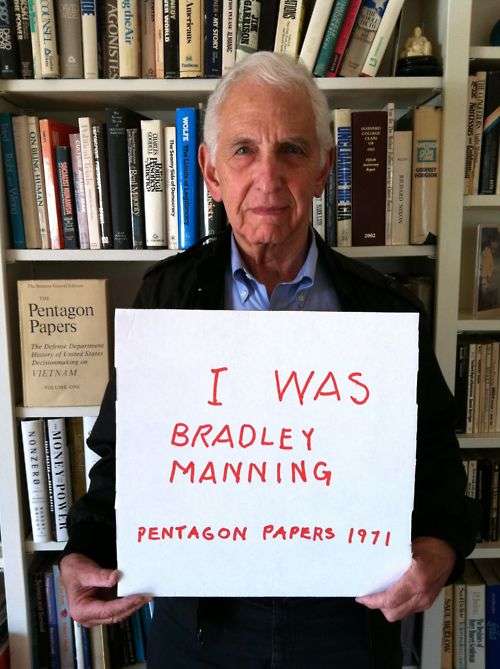
This is the digital age. This means that vast amounts of documents can be easily accessed and conveyed, as Manning did to Wikileaks, which acted as a conduit to the press. No need for the hours of furtive photocopying that Daniel Ellsberg had to do in the Pentagon Papers days, and you can't stop the press before printing: it's out and all over the Internet the instant the decision is made to reveal it.

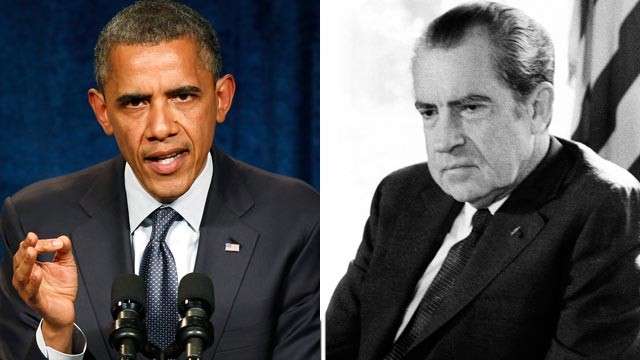
If you want to claim that Assange, Snowden, and Manning are traitors and spies, you have to ask yourself how come the information they provided was immediately published wholesale by the New York Times, The Guardian, Der Spiegel, and Le Monde, the most eminent journals of four of the West's leading countries. We remember that in the Pentagon Papers case Nixon at first tried to indict the New York Times, for publishing Ellsberg's revelations, but that was dropped. This time Obama didn't bother. He just went for little Bradley Manning, a sitting duck, so to speak, since he was serving in the military and could be manhandled, so they thought, in secret, and tried without a jury by a military court where the press had poor access. But how Manning has been treated is no secret. The more you try to hide, the more will come out: the more secrets you create, the more will be revealed.
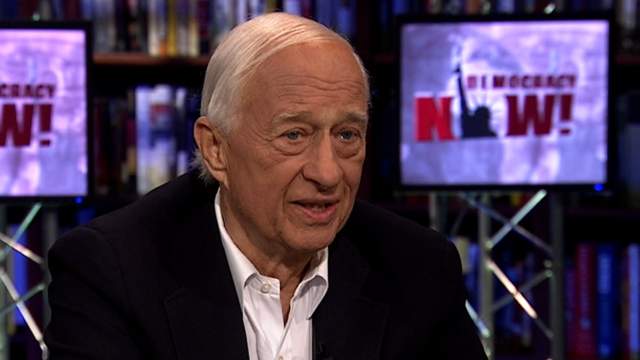
James Goodale on  Democracy Now!
 !It is interesting to see what James Goodale, a distinguished First Amendment lawyer and the New York Times' attorney in the Pentagon Papers case, had to say when interviewed on Democracy Now! about the Obama administration. He said that Obama is "behind Nixon and ahead of Bush II," but "close to Nixon now," and added that if Obama prosecutes Julian Assange, he will "surpass Nixon." It appears that the Obama administration has an indictment of Assange ready on file (for conspiracy, according to Goodale) and is poised to use it. Goodale discussed the revelations of the administration's surveillance of 100 AP reporters and indictment of six -- showing that Obama's unprecedented war on whistleblowers is paralleled by an even more wholesale war on journalism in America.


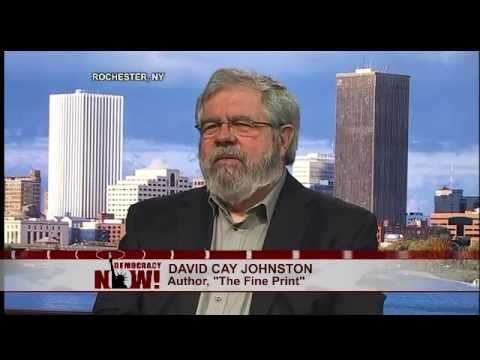
David Cay Johnston on Democracy Now!
In this light David Cay Johnston, a Pulitzer Prize-winning journalist and president of Investigative Reporters and Editors, was also interviewed on Democracy Now! about the administration's war on the AP. He described how Obama "campaigned on transparency," yet his White House from the first was hostile to the press. People would refuse to give information, say "What do you want that for?," refuse to say who they were, and even hang up on him. This is a secretive administration and it makes no bones about it. Johnston said "I rate them worse than the Bush administration."

This is what we're dealing with. Think about this when you hear Bradley Manning and Edward Snowden, whose revelations have been an enormous influence in the world already, called traitors and spies. Snowden is demonized and sought for prosecution by the US, yet in Congress a big investigation is under way spurred by his revelations. This is the same kind of disconnect as the prosecution of Manning, while his revelations, published in the New York Times, are referenced constantly, part of common knowledge. This makes no sense. Whistleblowers break rules to serve a higher cause, often at great cost to themselves. They deserve protection, not prosecution. This presidency's mania for secrecy poses grave dangers to journalism.


__________________________________

 Article on The Whistleblower, "180° Flip Flop on Espionage Act Now That Journalists are in Cross-hairs"
http://www.whistleblower.org/blog/42/2136

LA Times review, 'Warn on Whistleblowers' fails to fully sound alarm
http://www.latimes.com/entertainment/mo ... 3586.story

New Yorker blog, "Demonizing Edward Snowden"
http://www.newyorker.com/online/blogs/j ... ou-on.html

Friday, July 5, 2013

Egypt: The people get rid of Morsi

Anti-Morsi demonstrator

The Egyptian people have taken to the streets again in unprecedented numbers, this time to oust the first democratically elected president (though by a small margin), the Muslim Brotherhood's Mohamed Morsi, who had served only a year. Clearly Morsi was not transformed by democratic election into a representative leader. His rule was heavy handed and arbitrary, serving not the people but himself and the Muslim Brotherhood, and was not seeming all that much better than Hosni Mubarak, the 30-year dictator the revolution of January 25, 2011 had deposed. The Muslim Brotherhood is not out of the picture, but its public support seems shaken. 

Things look different now from a year ago. The turbulent voice of the Egyptian people when they take to the streets is a powerful expression of revolutionary and democratic fervor. We've seen how the voices of Tarrir Square can impose the echoing cry of إرحل/irhal("leave") throughout the country and bring down a leader. But while driving out a thirty-year dictator was a very good thing, ousting an elected leader sets no democratic precedent. 

Morsi's aggressive but ephemeral presidency

What did Morsi do wrong? Plenty, it turns out. For an example offensive to foreigners, he appointed an Islamic fundamentalist associated with al-Gama'a al-Islamiyya, the group behind the 1997 Luxor massacre, as governor of Luxor province. The Minister of Tourism resigned as a result. A similar case is the recent trial and conviction in absentia of 43 foreign NGO workers; this goes back to before Morsi took office; but Egyptian rights groups have protested the Muslim Brotherhood's imposing of legal restrictions on their freedom to operate. 

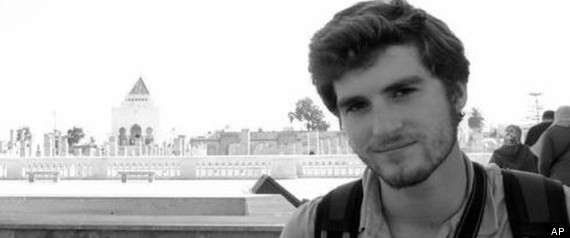
There are recent reports of anti-American feeling, possibly spurred by the increasing polarization under Morsi, which is illustrated by the sad fact that Andrew Pochter, a 21-year-old American college student in the country to teach English to children and improve his Arabic, was stabbed to death June 29 while watching demonstrations in Alexandria. Pochter seems to have been an inspiring and idealistic young man: too often mass action hurts the wrong people.


Morsi did a couple of good things at the outset to build confidence abroad. He helped end the fighting in Gaza and negotiated a $4.8 billion IMF loan. But domestically he quickly became overbearing. A recent article by Ziad Akl in the Egyptian Daily News listing internal problems of the Morsi presidency points out his earliest action was to exercise arbitrary (and confused) power over the Constitutional Court  (المحكمة الدستورية العليا), showing "clear signs of vulgar abuse of power" from day one. Morsi made constitutional changes designed to secure the Muslim Brotherhood's power. Another cause of Morsi's downfall was economic. He did nothing to right the drop in GNP that came with the revolution; in fact it has dropped further. Things were better under Mubarak, and Morsi might have done better to stick to Mubarak's programs if he could not improve on them. 

In a bold move to reform the Egyptian military Morsi forced older Mubarak-era high ranking officers, headed by Field Marshall Muhamad Hussein Tantawi, into retirement, and replaced them with younger ones. It doesn't look like this is going to make musch difference now. The inbred, hereditary elite that is the top echelon of the Egyptian military no doubt remains influential. Morsi removed the unpopular prosecutor, opened the doors for a retrial of Mubarak and other officials, and granted himself and the Constituent Assembly (الجمعية التأسيسية) immunity from rulings by the country's pro-Mubarak judiciary. Critics feared pro-Mubarak judges would dissolve the Constituent Assembly, just as they had dissolved the country's first democratically elected parliament before Morsi was elected president in June. At first Morsi didn't touch Abdel Meguid Mahmoud, the prosecutor general responsible for lenient sentences for Mubarak and others of his regime, but then he ousted him. 

All Morsi's actions tended to increase the polarization between groups. 


The enduring power of the Egyptian military 

Democracy has a special obstacle in Egypt: the military. This is a powerful force for stability, but also a self-serving elite, with a vast network of businesses it owns. With the ousting of Morsi, the military is taking over again as when Mubarak resigned. The Egyptian military is deeply entrenched. Removing presidents won't get to it. It's highly political, but ideologically opportunistic and flexible. It was not dislodged by the revolutionary spirit of two and a half years ago after Mubarak resigned: instead it took control, and would not leave till Morsi became president. Can anything dislodge it? As a recent NY Times article put it, the Egyptian military "has one primary objective. . . preserving national stability and its untouchable realm of privilege within the Egyptian state." And maybe not in that order. The temporary leader they have put in, the top judge Adly Mahmud Mansour, seems a mere front man. 

Adly Mahmoud Mansour
This objective has been reasserted now. Here are two Tweets July 4 from Sharif Abdel Kouddous,* the Nation Institute Fellow and "Democracy Now" reporter in Egypt: "Senior MB [Muslim Brotherhood] member says entire Guidance Council has been arrested. Troops broke into members' homes. 'We're back to Mubarak's regime.'" Then a few minutes later Sharif tweeted: "Senior MB member: Army/feloul will use anti-Morsi anger 2 return 2 power then crackdown on anybody who speaks out once they're firmly rooted." (Feloul = remnants of the Mubarak regime.)

The Revolution or January 25 did not get rid of these forces. It's back to square one. Mubarak is gone; Morsi is gone. Now the Egyptian people have little more faith in the Muslim Brotherhood than in the feloul. But perhaps ironically, the Egyptians in the streets have welcomed the military as saviors and old friends. (The military did support the people after the revolution, but will support anybody that's expedient.) 

So what is different now? The country is in disorder, on the verge of financial collapse. Transportation is at a standstill. Tourism, an important source of national income, is obstructed. 


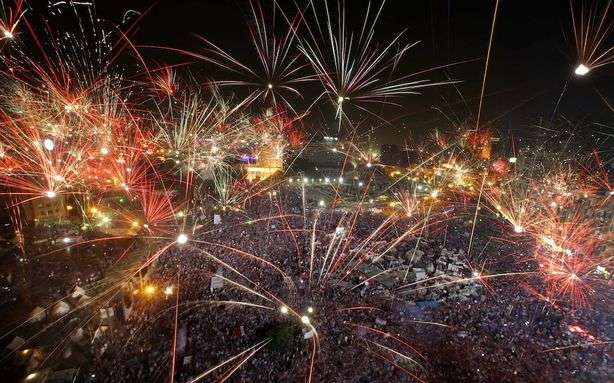
Tahrir Square after Morsi's resignation [Amr Nabil NYTimes]
Nonetheless the atmosphere was joyous in Tahrir Square, Egypt's symbolic theater of political action, when Morsi reluctantly stepped down. Now it is time for another election. But how will that go? Will the revolutionary fervor lead to a more democratic leader now, or will the polarization that increased under Morsi lead to more chaos? How does a revolution transform itself into a democracy? For one thing, by writing a constitution. And the constitution was one place where the new Egyptian revolution went awry, and this is just one of the basic fundamentals that need to be worked on.
------------------------------

*See the article  in The Nation by Sharif Abdel Kouddous, "What Led to Morsi's Fall--and What Comes Next?"  Further details and background about flaws of Morsi's presidency and dangers of the new military takeoer will be found in the article, "Coup in Egypt:  what does it mean? by Fred Goldstein in Workers World.   The Middle East Research and Information Project sums up the situation in Egypt as of July 10, 2013 in their MERIP blog, "Egypt in Year Three." 
_________________

Monday, June 3, 2013

Bradley Manning's pretrial statement (March 2013)


Image
BRADLEY MANNING


The court martial trial of Bradley Manning begins today, June 3, 2013. 

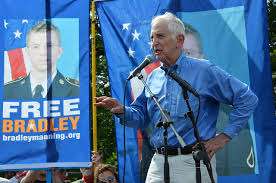
The Bradley Manning case is a crucial one, parallel in many ways to that of Daniel Ellsberg and the Pentagon Papers during the Vietnam War ear -- a link Ellsberg himself, still vigorous and an activist at the age of 82, has underlined in his ongoing strong public support of Manning's actions and support of his case. As everyone knows, the government documents Manning conveyed to Wikileaks were presented by major world media print outlets, though the New York Times, the chief US outlet for the leaked information, has denied any responsibility to stand up for Manning, saying it likewise had no feeling of responsibility to Daniel Ellsberg, though they were relieved that he was released. 

Here are transcripts from a surreptitious recording of Manning's own pre-court martial statement in March 2013 as transcribed by Democracy Now!, which broadcast the statement at the time. It's interesting to note that though various sources had depicted Manning as undone by his youth and discomfort about his homosexuality, neurotic, fearful, or crazed to begin with or as a result of his long solitary confinement by the government, his words were forceful and clear and he spoke in a strong, confident voice that belied all those claims. The quotes are broken up as they were in the program.

On his decision to leak what are called "Significant Activities" tables, or SigActs for short, incident reports from U.S. military operations in Iraq and Afghanistan:

BRADLEY MANNING: I began to think about what I knew and the information I still had in my possession. For me, the SigActs represented the on-the-ground reality of both the conflicts—of both the conflicts in Iraq and Afghanistan. I felt we were risking so much for—we were risking so much for people that seemed unwilling to cooperate with us, leading to frustration and hatred on both sides. I began to become depressed with the situation that we found ourselves increasingly mired in year after year. The SigActs documented this in great detail and provided context of what we were seeing on the ground.

In attempting to conduct counterterrorism, or CT, and counterinsurgency, COIN, operations, we became obsessed with capturing and killing human targets on lists and on being suspicious of and avoiding cooperation with our host nation partners, and ignoring the second and third order effects of accomplishing short-term goals and missions.

I believed that if the general public, especially the American public, had access to the information contained within the CIDNE-I and CIDNE-A tables, this could spark a domestic debate on the role of the military and our foreign policy in general, as well as it related to Iraq and Afghanistan.

I also believed the detailed analysis of the data over a long period of time by different sectors of society might cause society to reevaluate the need or even the desire to engage in counterterrorism and counterinsurgency operations that ignore the debate—that ignore the complex dynamics of the people living in the effected environment every day.
. . .
On the so-called "Collateral Murder" video of an Apache helicopter—made by military—Apache helicopter attack in Iraq, July 12, 2007:

BRADLEY MANNING: It was clear to me that the event happened because the aerial weapons team mistakenly identified Reuters employees as a potential threat and that the people in the bongo truck were merely attempting to assist the wounded. The people in the van were not a threat but merely "Good Samaritans."
The most alarming aspect of the video to me, however, was the seemingly delightful bloodlust the aerial weapons team—they appeared to have. They dehumanized the individuals they were engaging and seemed to not value human life by referring to them as, quote, "dead bastards," unquote, and congratulating each other on the ability to kill in a large—in large numbers.

At one point in the video, there’s an individual on the ground attempting to crawl to safety. The individual is seriously wounded. Instead of calling for medical attention to the location, one of the aerial weapons team crew members verbally asks for the wounded person to pick up a weapon so that he can have a reason to engage. For me, this seems similar to a child torturing ants with a magnifying glass.

While saddened by the aerial weapons team’s true lack—crew’s lack of concern about human life, I was disturbed by the response of the discovery of injured children at the scene. In the video, you can see the bongo truck driving up to assist the wounded individual. In response, the aerial weapons team crew assumes the individuals are a threat. They repeatedly request for authorization to fire on the bongo truck, and once granted, they engage the vehicle at least six times.

Shortly after the second engagement, a mechanized infantry unit arrives at the scene. Within minutes, the aerial weapons team crew learns that children were in the van, and despite the injuries, the crew exhibits no remorse. Instead, they downplay the significance of their actions, saying, quote, "Well, it’s their fault for bringing their kids into a battle," unquote.

The aerial weapons team crew members sound like they lack sympathy for the children or the parents. Later, in a particularly disturbing manner, the aerial weapons team crew verbalizes enjoyment at the sight of one of the ground vehicles driving over a body.
. . . .

On his hope that the public would be as alarmed as he was about the conduct of the aerial weapons team crew members:

BRADLEY MANNING: I hoped that the public would be as alarmed as me about the conduct of the aerial weapons team crew members. I wanted the American public to know that not everyone in Iraq and Afghanistan were targets that needed to be neutralized, but rather people who were struggling to live in the pressure-cooker environment of what we call "asymmetric warfare."

After the release, I was encouraged by the response in the media and general public who observed the aerial weapons team video. As I hoped, others were just as troubled, if not more troubled, than me by what they saw.


DANIEL ELLSBERG AT MANNING  SUPPORT DEMO

Friday, May 17, 2013

Obama's overreaching on two fronts: universal battlegrounds, repression of speech 

(Ed Andrieski/AP Photo; David Hume Kennerly/Getty Images, from a 2012  ABC story)

Of the various major concerns about the Obama administration I alluded to last December, there are two clearly in the foreground at the moment. First is the administration's assumed right to wage war anywhere in the world, bypassing Article I, Section 8 of the Constitution, known as the War Powers Clause. The second is the repression of free speech, which takes us to the First Amendment of the Constitution. And both of these have many ramifications.

Universal battlefield

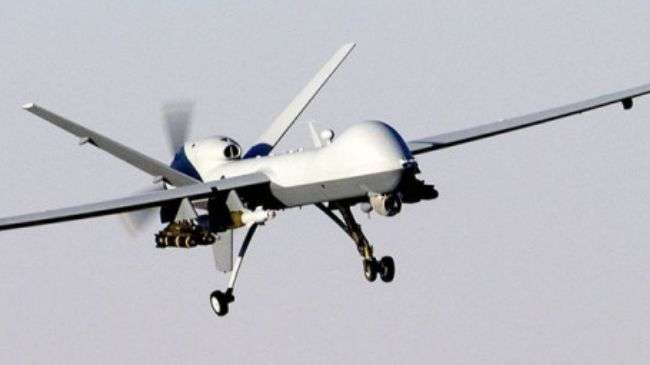
The use of drones, it's been pointed out, appears to replace the odious "extraordinary rendition" of the Clinton era, greatly stepped up by Bush II after the September 11 attacks, which involved sending suspects to be tortured and interrogated and permanently incarcerated outside US borders. No need for "extraordinary rendition" with Obama's personal "Kill List," by which he simply sends drones out to kill supposed enemies wherever they are, without apprehension or questioning. The other element is the redefining of the field of battle, by which the Pentagon looks on Obama as qualified to launch an attack, preemptive or otherwise, anywhere on the globe. This is where the War Powers Clause is most dramatically violated. At a hearing of the Armed Services Committee, it appeared that the Pentagon, revisiting the Authorization for Use of Military Force, or AUMF, enacted by Congress days after the attacks on Sept. 11, 2001, now define this act as giving the President the power to wage endless war anywhere in the world, including in Syria, Yemen and the Congo. At the meeting, new Maine Senator Angus King declared this reinterpretation of things "astoundingly disturbing."

US ASSASSINATION DRONE

In his recent New Yorker piece,"Remote Control: Our Drone Illusion," Steve Coll considers the new US conception of warfare, examining two newly published books of investigative journalism, The Way of the Knife (Penguin), by Mark Mazzetti, a New York Times reporter; and Dirty Wars (Nation), by Jeremy Scahill, of The Nation. These books both describe a "war without battlefields," without specific ones, anyway. Notably, as in the case of Anwar Awlaki, the government has assassinated US citizens. It's important to note that the Obama administration is expanding the policies of the previous administration, not diminishing them, in terms of concept and policy and how they are carried out. "Astoundingly disturbing"? You could say that.

Attack on speech and the press

The attack on speech has two main sides too, victims being divided among those who give out information, the "sources," and those who report what they say, the "reporters," in traditional terminology. Just as Nixon sought to attack both Daniel Ellsberg and the New York Times, Obama is after both Bradley Manning, an easy mark and already long incarcerated without trial, and Julian Assange, of Wikileaks, whom the powers that be would like to remove from his refuge in the Ecuadorean Embassy in London, send to Sweden, and extradite to America for imprisonment and, perhaps, trial. The government's attack on whistle blowers has been exceptional in its determination and severity.

But there is now something new, a scandal that actually links Obama with Nixon in the minds of many. This is the news that the Justice Department has invaded the email and phone communications of one hundred newsmen of the Associated Press for months, without a credible cause or any result. The excuse for this given by a stonewalling Attorney General Eric Holder was trying to find who had revealed the instance of a Yemeni would-be bomber that he claimed was of tremendous danger to the citizenry.

US ATTORNEY GENERAL ERIC HOLDER

The Obama administration turns out to be, among US governments, an excessively repressive and invasive one. According to a New York Times editorial, "Spying on the Associated Press," this administration has indicted six current and former officials under the Espionage Act, which had previously been used only three times since it was enacted in 1917. Daniel Ellsberg was one of those earlier three.

There is some irony in the fact that Europeans still seem to complain that compared to Bush II, whom they resented, Obama is "weak," when his second turn seems more and more decisive, despite the impossibility of his controlling the Republicans in Congress. Now Bush II comparisons vie with Nixon ones. Recently the lawyer for the New York Times in the Ellsberg case, James Goodale, interviewed on Democracy Now! concerning his new book about it, points out that the Pentagon Papers case is about censorship, and he debunks the claim that the information Ellsberg revealed or the Wikileaks information or, by assumption, the case used to justify invading the privacy of 100 AP reporters, was in any of these cases critical or important. Goodale calls the Pentagon Papers case "hot air" and the new one "malarkey." But he says that Obama has drawn even with Nixon now, and depending on how he pursues current cases he may pull ahead of him as a more repressive President.

The issue is one of control. By declaring more and more documents "Secret" or "Top Secret" or whatever, the government asserts the right to hide its actions and its decisions, and this is the hallmark of totalitarian regimes. There is no discussion; there is no openness. This then gives rise to the question of whether we live in a democracy. But of course we have this information, and it is being discussed in the press.


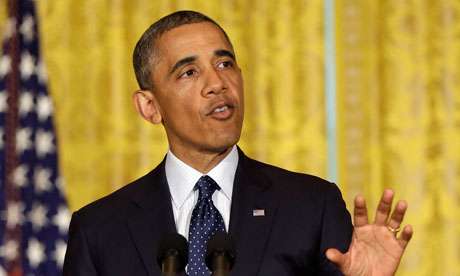
BARACK OBAMA

Obama's tone is often troubling. It would be nice if he didn't use "I" so much in talking about the policies of his administration. When a new issue came up, of the Internal Revenue Service's allegedly vetting requests for non-profit status selectively focusing on ones with the words "Tea Party" or "Patriot" in their names, Obama replied: "I’ve reviewed the Treasury Department watchdog’s report, and the misconduct that it uncovered is inexcusable. It’s inexcusable, and Americans are right to be angry about it, and I am angry about it. I will not tolerate this kind of behavior in any agency, but especially in the IRS, given the power that it has and the reach that it has in all of our lives." It would be nice if he used "we" more often, or "this administration." He sounds like a schoolteacher giving a tongue-lashing to naughty students.

Another aspect of things is one described by David Cay Johnson in the case of government spying on AP reporters -- a marked secretiveness toward the press. The administration boast of seeking a revival of the "media shield" law, as others, including Assange, have pointed out, is meaningless, because it has no force in cases of claimed "national security" (such as this one). Furthermore, Johnson, who is President of Investigative Reporters and Editors and a Pulitzer Prizewinning journalist who has dealt with administrations going back a while, has this to say about the current one: "I and many other journalists have observed that this administration, despite its public rhetoric, has repeatedly and continually been very difficult to deal with. I rate them worse than the Bush administration. And every single story that I wrote at the New York Times, with one exception, had Bush people on the record by name, rank and serial number. So, this is a very troubling aspect of this administration. It is hostile to the news media. It seems to have an attitude that if they don’t like the question, they don’t have to answer it. And it makes it very difficult and cumbersome to get responses from there. They’re behaving much more like a corporation than like the people’s government." The effect of a big story like this AP spying case is that people are afraid to talk to the press now, Johnson pointed out.

So this is not only an administration and a government that now wages war arbitrarily wherever and whenever it chooses using modern instant assassination techniques. It is also an extraordinarily repressive and secretive group, whose behavior lacks openness when compared to Bush II and his "neocons." It is hard to say where this will all lead, but it doesn't look good.

Saturday, March 23, 2013

Iraq ten years after: what "shock and awe" really means


"Shock and awe" initial attack on Baghdad 20 March 2003


A false basis

Now, on the tenth anniversary of the Iraq War, a lot of assessments of this event are being written. And this is not easy to do, because the effects are so sweeping. To begin with is the terrible example of responding to a terrorist attack by a group based in one country (Afghanistan) by making war on another country (Iraq) unconnected with the attack. This was a war fought entirely under false pretenses, and leaders, press, and the American general public went along with it. The pretexts should have been patently false to anyone. There was no evidence that Saddam Hussein had links with Al Qaeda. There was no proof that he possessed "weapons of mass destruction" (an ominously vague coinage for nuclear weapons) and might use them on the US. When the falsity of these claims became obvious, the Bush administration switched to the claim that they were liberating the Iraqi people from a tyrant. Indeed Saddam Hussein was a tyrant. But the US loves tyrants and does not make war on them, not in the open, anyway. The irony is that Iraqis today feel less safe now than than under Saddam. They were not liberated. They were delivered into evil and destruction.

Gullibility

The worst thing the Iraq War proves about the US is how mindlessly Americans feed on mainstream TV "news," with no sense of history, collective memory, or understanding of politics, world affairs and geography. This is what Noam Chomsky describes in his book, Manufacturing Consent. This makes the American public ripe for incitement to another pointless, dangerous, brutal, costly war of choice like the Iraq war. Next on the agenda clearly is Iran, to please Israeli hawks. Americans are easily deceived into accepting their government's arbitrary, violent acts of imperialism. Little ones, like the takeover of Grenada under Bush Senior, go almost unnoticed, accepted as routine. Big ones, like Vietnam or Iraq, are enthusiastically supported with dollars and lives, until people wake up and realize they were a mistake all along.

The many costs

As I predicted at the time, the 2003 invasion of Iraq further destroyed the already beleaguered but then still internally secure country and left it in a state of chaos that today just gets worse. No one could have predicted just how spectacularly the US would mismanage the aftermath of the war, sowing the seeds for civil war and disorder, greatly strengthening Al Qaeda in the region. Moreover Iraq's current leader, Nouri al-Malaki, a client and handpicked ally of the US like Hamid Karzai in Afghanistan, himself is a tyrant. Bush II's claims that the US and their allies were bringing freedom and democracy to the country were a mockery. The US is weaker, impoverished by the two long wars in Iraq and Afghanistan. Afghanistan is as ungovernable as ever. Iraq is closer to Tehran.

The human, material, and monetary costs of the 2003 Iraq War are staggering. For US taxpayers, the price tag is estimated at $2 trillion and rising, some say eventually to $6 trillion. Hundreds of thousands died in Iraq, and the deaths are ongoing. Iraq Body Count lists 312 violent deaths already in Iraq this month. For 2006-2009 the most common number of refugees given was 2.5 million, mostly to Syria and Jordan. (Nowadays the revolt in Syria accounts for 100,000 Syrians listed as refugees to Iraq.)  Ever since 2003 Iraq has remained one of the world's most unsafe places.

Falluja baby with multiple birth defects


The most horrible toll of the Iraq War is ongoing collateral damage to the innocent. In the foreground now are the cancer and manifold birth defects caused by depleted Uranium and other toxic materials, particularly white phosphorus (both forbidden by international law) heavily employed by US forces in areas like Basra and Fallujah. Cancer and birth defects have recently been reported to be definitely more numerous in those locations than they were in Hiroshima and Nagasaki after the atomic bombs, possibly up to 14 times more numerous, the birth defects also individually more extreme.

The Iraq War has taken a terrible toll on Americans and Allied troops who fought there too. We hear little of them but we do get wind of the neglect of veterans and the constant suicides. One victim was Tomas Young, featured in in the 2007 documentary Body of War, a young soldier paralyzed in his first minutes of combat in Iraq. Young had joined up to fight in Afghanistan, thinking that was where the trouble came from. He never wanted to go to Iraq, and after he returned disabled he became an anti-war activist. This week Democracy Now! reported on Tomas Young's recent letter to Bush and Cheney calling on them to admit to their war crimes and his current plan to end his own life of constant pain.

The US governing elite has not learned from any of this. When Obama visits the Middle East, Israel first of course, bypassing Gaza and the Palestinians, he speaks of "all options" concerning Iran being "still on the table," a menacing phrase pleasing to Netanyahu.

What "shock and awe" really means

The "shock and awe" approach, known in military doctrine as "rapid dominance," is simply the use of overwhelming force. It's favored by the US, which has by far the greatest military strength in the world, as a method of defeating the opponent (or victim) psychologically as well as militarily. But a corollary benefit that the Bush hawks and their predecessors and ideologues the ultra-right Project for the New American Century  clearly expressed is to show off that the US is the dominant power on the planet. This is what "shock and awe" really means. To be the bully in the schoolyard. Except that the schoolyard is left strewn with corpses and deformed babies, an environment of chaos, no longer habitable.

Strength of mind?

But let's return to our calm warnings, presuming a world of reason still exists, as editorial writers like to do. In one of his typically savvy and straightforward op-ed pieces in the NY Times, Paul Krugman used the Iraq War anniversary lessons to point in a column called "Marches of Folly" to the way group think also fosters misguided actions on the economy - here as in Europe (led by Angela Merkel, whose country, Germany, wields key purse strings) to ignore the fact that in a weak economy what's needed is stimulus and jobs, not deficit-hawking. Confusion is as easily sold on these matters, Krugman argues, as on going to war in Iraq. Don't believe in any of these public matters that "everyone" thinks something, Krugman warns. Think for yourself.

Well, I never believed any of the claims to justify the war in Iraq. I did not see any real point in war in Afghanistan either, for that matter, though immediately trapping Osama in his lair would have made sense if it could have been done. Apparently since it took the CIA ten years to find him, it couldn't. Anyway you do not make war on a whole country to track down a small band of terrorists. The police tracking goes on, even if its results can be slow; various Al Qaeda attacks have been stopped, just not, alas, the 2001 ones. War serves other purposes, unfortunately. It galvanizes the country, and makes its leaders appear strong. The Iraq War was very profitable to war profiteers like Blackwater, K.B.R.-Halliburton, CACI and Titan. It was profitable to oil companies and oil rich Gulf nations. But I did not believe Condaleeza Rice's "smoking gun." I was deeply embarrassed by Colin Powell's Power Point lecture to the UN; you could almost hear the humiliation already in his voice. But the trouble is, I and those like me didn't speak up loudly enough. As Yeats says in his poem "The Second Coming":

The best lack all conviction, while the worst
Are full of passionate intensity.

_____________


US Marines in Falluja
 ________________

Note:  In the Independent in March and April of 2012 Robert Fisk published a series of three articles about the children of Falluja with birth defects:
The Children of Fallujah - Sayef's story..
"The Children of Falluja - the hospital of horrors. "
The Children of Fallujah - families fight back.

_________________

Saturday, December 8, 2012

Obama2: Front Man

Obama addresses CEO's in Washington 5 Dec. 2012

Such a deal

 Obama's second term promises a new assertiveness and strength against his Republican opponents. Is that coming? Maybe he will manage to get that extra 2% back on the taxes (rarely paid) of the super-rich. He is standing firm -- finally-- on that. But his statements about the current "Fiscal Cliff" nonsense (his even acknowledging this bugaboo showing weakness) promise further capitulation to the right on "entitlements," the basic social safety net the Republicans are pledged to shred ASOP and Obama all along has shown a readiness to cede, at least in part. As Paul Krugman wrote recently, let's not make a deal.

Incarcerations and deportations

"Closing Guantanamo," one of the various promises not kept the first time, is now announced to mean shutting that facility and moving the same prisoners to different locations. That wasn't what we meant. So the original prisoners, hastily seized on dubious charges in many cases, will be kept on, as Bush intended, without trial and without even charges brought. This step goes hand in hand with Obama's anti-immigration policies pursued through most of his first term. Statistics show Obams has deported more people than President Bush, "Dream" gestures notwithstanding. It is a hallmark of the Obama Presidency, in contrast to the blunter (but Texas-raised and more Latino-friendly) Bush, to present a pleasing front, while carrying out brutal actions. Assertiveness and strength, perhaps, but behind a mask of blandness, and not of the kind progressives are looking for.

Bradley Manning at court appearance
 Repression of speech 

Obama has outdone his predecessors in repression of whistleblowers, a policy his administration even boasts of. The show case is that of Bradley Manning, who has recently testified that he thought he would die in custody. Obama is responsible for the two-year violation of Manning's basic human rights and of international law, a brutal period of incarceration that ought to gain his release or at least a reduced sentence; but we shall see. Manning is just one example of a general policy. Speaking up to power gets worse punishment under Obama than under Bush.


Julian Assange

The direct corollary is the official US government response to WikiLeaks, which it has sought to bankrupt by forcing credit card companies to cut off donations, while hounding its founder Julian Assange, who sought refuge at the Ecuadorian Embassy in London to avoid trial in Sweden and likely extradition by the Swedes to the US, where he might suffer an even worse fate than Manning. To judge by the enthusiastic use of WikiLeaks' major revelations by some of the West's major newspapers, these two men performed a useful service to the world. Daniel Ellsberg thinks so. The US's stance toward Manning and Assange reflects the current administration's repressive policies, not so different after all from the "red baiting" of the Fifties, though thankfully we don't live in the atmosphere of fear and repression that prevailed back then. Things have improved; we're just looking at whether that has anything to do with Obama.


License to kill

Thus the Bush policy of the euphemistically named "extraordinary rendition," sending uncharged "terrorists" to other countries secretly to be tortured to death, has been replaced under Obama by something called "drones," unmanned devices sent off even more secretly to assassinate people anywhere at all, usually with some "collateral damage," of course -- which is when we learn about them. Why bother to torture when you can simply rub them out where they live? This was one of the big shockers of Obama1: learning that the President ticked off his own personal international hit list, subject to no oversight by anybody else. Push-button killing, ideal for yet another US leader unaware of the realities of war, this time one who never even did pro forma military duty as sometime member of a state national guard.

Global warming failure: fiddling while the planet burns

The failure of leadership for which Obama may be most remembered is on global warming. This is the US's crucial responsibility today, as the major first world polluter and the power that could have the most decisive effect in reversing or at least slowing climate change. A phrase or two about a "warming planet" by the President is a timid step onto a bandwagon with nothing to back it. At COP 18, the UN Climate Change Conference at Doha, Qatar, the arrogant US representative, Jonathan Pershing, blandly stonewalled, promising absolutely nothing and declaring the US's efforts on climate change to have been "enormous." Sure, the US has taken some actions, but it has not shown global leadership. As many have pointed out, the US should be particularly aware of its own vulnerability after the effects of Hurricane Sandy, but such is not the case. The US is joined by the other rich nations in decisively not providing essential leadership in climate action, thereby effectively "locking in" unsustainable changes that will displace millions in the not-too-distant future. The Obama administration -- who else is in charge? -- will bear significant responsibility for leaving island nations, coastal cities, and future generations doomed and insuring worldwide chaos when millions are displaced by drought and rising waters. This failure by the US under Obama's leadership isn't just numbing and depressing and more of the same, like others: in this case it's downright terrifying.


Survivors of flooded island of Leyte, Philippines


Pollution and oil:  money talks 

And therefore Obama promises US oil self-sufficiency, at the cost, of course, of the American environment, since harvesting US oil requires more dangerous and highly polluting methods than are possible in the oil-rich Middle East. This has nothing to do with saving the environment and everything to do with short-term profit and abdication of global responsibility. It's the kind of stance that made sense when a Republican administration adopted it -- par for the course, the favoring of large US corporations -- but when it comes from a Democratic President, it underlines the increasing lack of any difference between the two parties and between Obama and his predecessor. The blending together of both parties and their abdication of responsibility was recently underlined by longtime Republican policy maker Kevin Philips. All this makes one begin to agree with Brad Pitt's hit man character's blunt speech at the end of the new movie Killing Them Softly, in which he declares America is a business, not a country.

In those terms Obama is not the CEO; there are bigger, stronger CEO's. He is just a front man.

Pursuit of empire

Obama excels, like previous occupants of the Oval Office, as acting as a spearhead in the pursuit of US militarism. He wound down the US invasion of Iraq only to build up "his" war, piggy-backing Bush again, focusing on Afghanistan. But this again is just show, because the main thing is keeping up the US's military presence all over the globe, 800 bases in 63 countries. That has not changed and is not going to be reduced to help the starving and jobless. It is clear that continued world domination is a top priority for Obama, as it has been for his predecessors, no matter what the human cost.

We're basically on our own 

Barack Obama is a nice gentleman, a shooting star in politics if a bit inexperienced for the presidency, who is filled with good will, you can be sure. And you may be sure that not doing the things listed in this essay would be very hard for him. He faces Republican opposition (but with greater Democratic and administration strength, which he would do well to make use of) and the much greater force of the banks and the corporations, if he attempts to accomplish anything positive for democracy and a sane, safe world for future generations. Yet it is his job to do these things, so he implied, and so his supporters have a right to assume.

Don't count on his doing them on his own, though. It's perfectly clear that neither Obama nor the people around him has anything much to do with progressive politics. Americans who voted for Obama need to realize this and act accordingly. This is no time to assume all is in good hands and that the President is doing the best that he can. It is the people's duty to demand their rights. To keep taking stands. Keep saying no. Keep petitioning. Keep demonstrating and protesting. Progressive change doesn't come from the top.

Saturday, July 28, 2012

Intervention in Syria?

Bashar Al Asad  speaking at the University of Damascus, January '12


Tragedy looming?

Russia warned on Saturday that a "tragedy" was looming in Aleppo but also said it was unrealistic to expect that the government of Bashar Al Asad would stand by when armed rebels were occupying major cities. So massive arms and numerous government troops are heading into Aleppo, the largest and richest city in Syria. The US and its allies are calling for and may already be providing direct aid to the rebels in Syria, and are also backing the cause of outside military intervention, all of which has encouraged the rebels, despite the odds. All kinds of elements, admirable and dubious, are involved in the anti-Asad revolt, as are in the regime.  By openly calling for the fall of that regime, the US has undermined Kofi Annan's peace effort, and that effort has been failing.  Al Asad has regained control in Damascus, but his regime may not be long for this world. There's a consensus of Syria watchers inside and outside the country that he had a chance to remain in power that he may have lost this year by failing to take conciliatory actions that might have saved his image and mollified the general public, and that only diehards are going to stick with him in the days and weeks to come. Open defectors now include high level military officers and even the Syrian ambassador to Baghdad.


Missed opportunities

Obama's and Ms. Clinton's warnings to Syria that they're "watching" the regime closely mean nothing. Obama is merely echoing the exact words of Ehud Barak. Israel wants to foment disorder in the surrounding region, particularly Iran and Syria, knowing it has full US political and military backing in its hostile stand. Seymour Hersh has long chronicled Israel's secret efforts to plan further attacks on Syria with US cooperation, as well as the possibilities for an Israel-Syria peace pact. Israel might quite likely be behind the bomb attack that wiped out some of the Syrian government's main figures in one blow; so might Al Qaeda. Otherwise, the affair is a local one, but dangerous to the whole region. Because Syria was allied with Iran it was a write-off in the eyes of Washington, and so it went its own way, despite Bashar's interest in talking. The US's longtime distaste for Syria has been a missed opportunity to acquire a useful ally in the region and temper Israel's exceptionalism. It also means the US is out of touch with Syria, except to be planning aggression against it in collusion with its Israeli confreres. 


Kofi Annan


 Choices

Now there has been a direct push to intervene with NATO in Syria, as was done in Libya, supporting the rebel forces, fomenting more violence, and wrecking Kofi Annan's plan for peace.  (Information about atrocities may again be unreliable).  This is just as dubious a move in the one place as it was in the other.  The "humanitarian disaster" justification and the claim of fostering "democracy" won't wash.  There are too many "humanitarian disasters" the US ignores.  In both cases intervention is transparently a way of increasing the US' and its allies' hegemony in strategic oil-rich regions. 


 To be sure, as with Libya, Syria poses a tough choice. Al Asad's regime has been ruling with an iron hand, and as the resistance has grown, it has committed atrocities against its own citizens. But the intervention alternative is worse. Unthinking supporters of US foreign policy think the invasion of Iraq was a rough job but somebody had to do it. In their eyes things got bad for in Iraq for a while, but it was all for the best and they have a democratic government now. Such thinkers look on Al Asad's downfall as a positive development. But if you look closer at Iraq and see the US's greatest Middle East policy disaster, you will see further disorder with the fall of Damascus. Syria too is a place that will fall into chaos if separate areas and cities are taken over by Sunnis, Shi'ites, Salafis, Kurds, Christians and Al Qaeda. 

Washington certainly can make its own independent diplomatic mistakes but the continuing failure of US Middle East policies is often the result of the Israeli tail wagging the Washington dog -- while Israel moves ever further toward militarist paranoia. The opportunity to make a great peace with Iran, which might have led to positive US influence on Damascus, has consequently been lost. And so we have the situation today. 


Patrick Seal speaking on 'Democracy Now'


A peaceful alternative? 

Patrick Seale, a British writer about Syria whose wife incidentally is the daughter of a former Syrian ambassador to Washington, is almost a lone voice in the West in insisting the Bashar Al Asad regime must be saved, if possible. In a recent article, "What Is Really Happening in Syria?" (July 19, 2012), he argues that mistakes have been made on both sides, meaning by implication atrocities committed. But he insists that outside forces supporting the rebels are making the situation worse. He points out that the fall of the regime would be bad for minorities, and thinks that even Lebanon and Jordan might not survive. Earlier Seale feared civil war in Syria "would destroy the country, as happened in Iraq, and could destabilise the whole Levant." He wants the opposing elements to sit down to negotiate. 

Western leaders too rarely consider using their enormous power to bring about that kind of outcome. As Seale points out, Damascus' efforts to retain control of cities and regions within the country, which are seen as brutal from outside, aim to keep foreign powers from gaining a base to operate from and maintain stability. Seale urges the Western powers to unite with Russia and China to bring about a negotiated solution in the country. This may seem too optimistic. The US appears interested in using its clash with Russia over Syria as part of a reawakening of cold-war hostilities, or at least some Russian sources say so.  Nonenetheless Syria poses a danger of regional destabilization, as Seale says, and dampening down hostilities there could be crucial to the stability of a wide area. 


Vali Nasr of Johns Hopkins takes it as a given that Al Assad will fall, but asserts that supporting the opposition to bring down his regime is "the wrong goal." Nasr proposes that making solid arrangements for a "transition plan" of "post-Assad power-sharing" among all the elements would encourage Syrians still in Al Assad's "corner" to make way peacefully for a new government. Turkey would have to come on board, as well as Russia and China, and Iran would have to stop its unwavering support of Al Assad's regime. This too seems very optimistic. 

Nasr parts from Seale in advocating foreign troops to "enforce the cease-fire" and protect Al Assad's minority supporters who have stuck with him for the security he has provided -- who, by the way, include Palestinians. It may be germane to mention that Nasr is an adviser to the Obama administratiobn. In that light he is unlikely to stick to advice that may displease Israel.  Seale holds in a more recent article that what happened to Iraq suited Israel just fine. He describes Israel as "an expansionist and aggressive state which believes that its security is best assured, not by making peace with its neighbours, but by subverting, destabilising and destroying them with the aid of American power." This unfortunately seems to be the case.


In an column for Al Jazeera English, Larbi Sadiki of Exeter University is outspoken in opposition to Al Assad but against intervention. In forestalling that, he thinks Russia has prevented "a repeat of Libya" and encouraged the more desirable "self-liberation of the Syrian people" that means further suffering, but also the greater amount of time necessary to plan a new regime and avoid chaos and disorder after the government falls.   Larbi is right in stressing that the Arab Spring must remain indigenous and has no real meaning otherwise. But it is a process and not an event, and a long slow one that succeeds more in some places than in others.  


After an explosion in Damascus