Friday, September 9, 2011

Reviewing 9/11, ten years after


THIS. . .

 As a symbolic event

The French philosopher Jean Baudrillard called the Gulf War a "non-event." But in his essay "The Art of Terrorism," published in Le Monde shortly after September 11, he went in the opposite direction. He deemed the destruction of the Twin Towers to have such enormous symbolic value as to be called "the 'mother' of all events." And 9/11, ten years later, remains a symbolic "'mother' of all events." It still seems extraordinary, almost unbelievable, this "'mother' of all events," this hijacking planes and flying them nearly simultaneously into the tallest buildings in New York City. It seems fairy-tale-like that a small band of Arabs plotting in mountains and caves with a bearded Saudi leader in robes called Osama bin Laden devised an attack that indeed struck terror into all Americans. They had driven a symbolic stake into the heart of Wall Street, lunged at and wounded the Pentagon, and barely missed heading for the White House but crashed in Pennsylvania, all in several hours, on a bright, beautiful day in autumn.

So much tragedy and destruction, so much terror, brought about by so few in such a short time. What mattered was how the blows were struck. The deaths of 3,000, and the illnesses and deaths of many thousands since from collateral environmental causes, are indeed tragic, a collective wound that will never heal. But note that in historical and global terms these events are only a tiny blip. It is the symbolism that counts; also the skillful exploitation of fear and hubris done by men who, unlike us, have no fear of death, because they care nothing for their lives--as Baudrillard explained. Americans believe themselves, their government, their way of life, their very lives, to be very special. They like to call themselves the "leaders of the free world." They are used to attacking, not being attacked; to seeing their wars fought on other soil, not at home. This was different.

As a pretext


President Bush answered the symbolic events of September 11th with a symbolic War on Terror. September 11th became the immediate symbolic pretext for a new series of endless wars in Iraq, Afghanistan, and elsewhere, while the War on Terror itself has never existed. It's abstract; it cannot be won, and it can be used as an excuse for anything. Bush and his allies and cronies waged these first wars, and the even more dangerous wars at home on freedoms and constitutional rights in America, all under the handy and relatively new (or at least newly dramatized) umbrella of the War on Terror. These wars were clumsy and self-destructive compared to the strike of Al Qaida, feeble efforts to "bring democracy" to the Muslims (while taking it away from Americans), marked by manifold misjudgments and overkill, as has been the style of the USA, the most overarmed and superrich of nations, throughout its history. So these actions were new and different but also more of the same.

In essence they were also foreordained-- envisioned in the neocons' pre-Bush "Project for a New American Century", which came to light when people began to look into the falsity of the pretexts for the bombing and invasion of Iraq in 2003. It was also obvious that the attack on Afghanistan was senseless, and futile. The best thing to do would have been to pursue Al Qaida silently, and nothing else. But wars are very public rituals that have the function of feeding power. And the symbolic "'mother' of all events" that is September 11, 2011 has served the US and the other western powers well as a pretext for feeding power for a decade, and is still going strong.

9/11 was neither unexpected nor new, nor was its aftermath. For America and for the world, of course, September 11, 2011 was an event that changed things. It was an immensely disturbing day that required everyone to rethink their lives, to greater or lesser degrees. Apart from the individual suffering, the event showed America as no longer impervious. But the big mistake was to say that 9/11 changed "everything." Unfortunately when we look at the enormous inroads on civil liberties and the wars fought in our names, indeed we see that the powers that be have tried to change everything--everything that matters, anyway. But if these changes are allowed to stand, nothing will matter anymore. Meanwhile America is still the strongest and richest nation, but perhaps at the cost of its soul. 

When we review 9/11, we need look at how much everything was the same. One has only to view some American films to see that Arabs were already long treated as satanic brutes. The prison-industrial complex was already well under way. Civil liberties have always been under threat. American presidents had already long carried out arbitrary bombings and wars of choice. The destruction of the Twin Towers just provided a great symbolic arena on which to stage the American dramas of paranoia and repression. "Terrorism" in the 2000's replaced the "Communism' of the 1950's. The "threat" of terrorism is miniscule compared to all that has been done to Americans and the rest of the world in the name of the War on Terror. And September 11 is the justification for the extremism of that "War."

The present and the future

When we see the new administration headed by Barack Obama, we find how indelible the mark of the Twin Towers, and Bush's use of them, have been. The promises about doing away with torture, rendition, and Guantanamo have turned out to be unreliable. The US has its outsourced super-Guantanamo at Bagram in Afghanistan, and who is to say that rendition has not been used under Obama and so, torture? Obama doesn't say openly "I'm a wartime president," like Bush, but he has stepped up the killing for which the War on Terror is the most reliable justification.

Against this background of failure and deception, Americans unfortunately have been weak. There is a lot of political activity but no mass labor movement or mass anti-war action, and not the needed movement to get the bums out of Washington--because the Congress has become dysfunctional and broken and a new lunatic fringe Tea Party tail funded by billionaires is wagging the Republican dog. There's some hope at the moment. Obama's joint congress "jobs" speech was stronger than expected, and might shame the right into considering actual practical moves to create jobs nationwide. Otherwise, however, the country remains on a dire economic course and Depression-era cluelessness still reigns.

Against the War on Terror and its culture of fear and repression, the most hopeful thing is the Arab Spring. If Arabs, and Islamists too, are actively involved in politics and are bringing down the governments that have oppressed them for decades, then Al Qaida, which fed on desperation at home, has no fertile ground anymore. That's the hope, anyway. We'll see how it plays out in Tunisia, Egypt, Libya, Bahrain, Syria, and all the rest.

. . .LED TO THIS

Sunday, August 28, 2011

Not so fast: US-NATO the clearest victors in Libya

Image
Rebels celebrating victory in Tripoli, Aug. 23, 2011

 Not so fast:  US-NATO the clearest victors in Libya

Last week, with a large part of Tripoli taken from loyalists, it finally looked as though, sooner than expected, the rebel forces were winning in Libya. Despite the illegality of the US-NATO intervention and the considerable number of deaths, casualties and infrastructure damage caused, it has evidently both helped the rebels gain control more quickly and prevented Qaddafi from massacring his own people. This is of course fortunate. Perhaps we were wrong to oppose the no-fly zone. Once the rebels requested it, it might have been immoral to deny it, despite the loss of independence for the rebels that results. But it's hard to see this as a clear victory for Libya.

Photographs in major western media showed young men celebrating victory. It seemed like a joyous moment, the apparent overthrow of a dictator, the anticipation of a new freedom. Not as pretty a sight as the crowds in Tahrir Square in Egypt's relatively peaceful revolution, yet cheering to see that the bloodshed may not go on very much longer. But the premature way a victory has been declared recently in the western press is suspicious. Qaddafi hasn't stepped down or been captured yet. While rebels were celebrating in Tripoli August 23, Qaddafi's son Saif al-Islam had escaped again and was free on the street there taunting them. Victory can't be declared as long as Qaddafi forces still control parts of Tripoli, or certainly did when the celebrating began. Things are still very difficult in Libya. 

In the first place we do not know who the rebels are. Gilbert Achcar has called that "the one billion dollar question." The US-NATO allies have chosen to anoint one leading rebel element, the TNC, the Transitional National Council, to make things look orderly. They're aware of the need to avoid the perceived disaster of Iraq, where the army was disbanded, the Baath Party purged from the bureaucracy, the seeds of total disorder and factional conflict thus sown immediately following the invasion. It's not so clear what governmental infrastructure there is to preserve here, however. We don't even know where Qaddafi and his sons are. Unlike the rulers of Tunisia and Egypt Qaddafi has not shown an inclination to step down. On the other hand, when he is truly out, Libya has a better chance of starting from scratch, since it has relatively little governmental or military structure.  A dubious advantage, perhaps.  But Egypt seems to have had almost too much structure, since the military has wound up continuing to control the country just as it always did. Uncertainty about who the various rebel groups are in Libya and how potential political leaders may be variously allied with them makes everything uncertain.

Image
Sail al-Islam al-Qaddafi free in Tripoli, Aug. 23, 2011

Some Middle East analysts, like Michigan professor and blogger Juan Cole, are cheerleaders for the US-NATO intervention in Libya's revolt and are claiming a great result. Others like Phyllis Bennis and Conn Hallinan, are extremely sceptical of this supposed "victory." The basic objections are not surprising, and so are the justifications, for intervention. Even Hallinan acknowledges Qaddafi "has a crazy streak." To many he looks simply crazy through and through. But the fact that a ruler is a dictator or even a madman is not a justification for overthrowing him from outside. Or rather, it is a kind of justification, but we can't just overthrow every regime we don't approve of. In fact interventions are highly selective. And this is particularly evident with the Arab revolts. So let's not kid ourselves. The Libyan intervention is a matter of self-interest. It might have been immoral to refuse it, but it's still opportunistic, not democratic.

The US is involved in the Libyan revolt for alliances and obligations, because Libya's location makes it so important to Italy and France, and the US wants to keep these key NATO allies indebted for help in its other wars, notably Afghanistan. More than that, the overwhelming concern, as in the case of Iraq, is obviously oil, of which the US is by far the major world consumer. Juan Cole called this idea "daft," quaintly using antiquated British slang. Not very daft for oil to be a concern when we are talking about the twelfth largest world producer and the largest producer in Africa. As Hallinan and Bennnis point out it's not the oil deals themselves that will change significantly but the specific contracts. The companies, Total, BP, and the rest, will remain the same, but the rebels will make "sweetheart deals," as Hallinan puts it, since they're beholden to the NATO allies and the US for holding the purse strings. Hence the NATO intervention will be of great economic benefit to western oil consumers and particularly the US.

Cheerleaders like to soft-pedal the fact, but despite Obama's claiming this isn't war and downplaying American involvement, the US has played a key role throughout the Libyan conflict. Make no mistake, the US will be one of the chief economic beneficiaries in the long term -- and also a military one. Hallinan stresses the role in these events of the new unified American military command for Africa, created in 2006, called Africom. He calls the Libyan intervention Africom's "coming out party." Africom will mean massive intervention in Africa. Behind this are plans for huge land grabs and competition among the world's most powerful and and fastest rising economies, including China and India, for the wealth of cheap resources, cheap land, and cheap labor that the African continent offers. Now that America's traditional alliances with the dictatorial right wing Arab governments are being undermined by the destabilizing effects of the Arab Spring, a new economic, military, and paramilitary stranglehold on Africa may compensate and help offset that, as well as helping resolve the US's current economic woes. The sweetheart deals may include Libyan bases as well.

While the American empire may be in decline as the late Chambers Johnson argued in his Blowback Trilogy,  the US still seems to be the one to emerge unscathed from conflict.  Despite its heady glimpse of liberation from tyranny, Libya still remains stuck in some ways in a no-win situation. Perhaps the western powers had a moral obligation to respond to the rebels' request for intervention.  But this aid in turn has to be paid for in economic and military domination -- a price Egypt has avoided by carrying out its own revolution.   The future of Egypt's revolution may be infinitely complicated, but the revolutionary spirit there seems solid, and greater independence from the US and Israel so far evident. The US-NATO Libyan intervention further extends the long reach of American economic and military power whose newest focus is Africa.

Image
Demonstrators, Tahrir Square, Cairo


Thursday, August 11, 2011

Obama the people-pleaser


 Barack Obama
 Obama the people-pleaser

 We have needed the strongest democratic president in a generation and we have gotten the weakest. Letters to the Editor of the New York Times inspired by Drew Westen's Sunday article, "What Happened to Obama?" (Sunday Review, Aug. 7, 2011 ) outline a problem that more and more of even the president's strongest former supporters are coming to recognize: he has not been the firm, decisive leader America has needed during this difficult time. "The president has allowed events to control him, not vice versa," one writer sums up. "Barack Obama has just not been tough enough to confront the myriad transgressions of the Congressional Republicans, who have decimated our economy and our political process," states another letter. "I am heartsick about this failure to offer strong, firm and effective leadership, particularly at a time when our country so desperately needs it," the writer concludes. Another writer to the Times expresses disappointment from the inaugural address onward. "I hadn't realized it then, but what we heard was the first of many lifeless lectures to come from the professor in chief." The president has failed to show his famed rhetorical gifts of late, and the lifelessness of his public speeches reflects his weakness in action. The writer laments the President's "passive handling of the debate over stimulus, jobs and the health public option."

Still another letter on this day focuses on what is the latest and perhaps most crucial turning point in confidence: the debut ceiling fuss, in which the Tea Party Republicans made their "narrative" more visible than the Democrats'. The writer points to a persistent criticism of the President: "Barack Obama is unwilling to identify a villain, without whom he has nothing to triumph over. Moderate Republicans face a similar challenge." The Tea Party, the letter says, showed its willingness to sink the American economy. They "are the villains here," the letter says, and "the president who is willing to say so is going to win the 2012 election." Another writer, still responding to Westen's powerful essay, says the people "elected an amateur with no record of accomplishment to the presidency," and wishes we could "reanaimate Lyndon B. Johnson."

Other letters to the Times look for the roots of President Obama's shortcomings and find them in the experience he describes in his books, Dreams from My Father and The Audacity of Hope: Thoughts on Reclaiming the American Dream. One writer sees Obama's "centrist posture" as "an expression of a lifelong struggle to please people and make sense of what it means to be both black and white." Still another asks, "What happened to President Obama? Nothing. He is the same person he described in Dreams from My Father, as unsure of his own identity and obsessively seeking acceptance from others, all others. But that is not the way governing and politics work."

There are deep ironies in the contrasts between Obama and George W. Bush. Bush had lackluster beginnings, but secure, patrician ones. Obama was a child of mixed race raised by a single parent, but he showed brilliance. However he may have started out and however much he relied on his posse of neocons, Bush in the White House spoke with sure tones. His posturing, macho, cowboy style was the reverse of the dry, compromising, professorial Obama. Bush's presidency was a disastrous one for America and for the world, but he went about creating his destruction with a sure hand and a firm voice. Obama creates his by dodging issues and changing sides.

Another letter in Obama's defense listing his accomplishments leaves decidedly mixed feelings. Yes, the new Strategic Arms Reduction Treaty strikes a positive note. Abolishing the gays-in-the-military fumble "Don't Ask, Don't Tell" is an improvement -- except that it has not yet taken place. The two Supreme Court nominations may be "superb," but that remains to be seen. The "Affordable Care Act" is a disappointment for all who wanted it because it lacks the one essential feature, a public option, and how much it may still be undermined by conservatives in Congress remains to be seen. The letter-writer cites the Dodd-Frank financial regulatory reform, but that is evidently a failure. The same things are happening again. Three years later, the front page headline of this same issue of the Times is "Financial Turmoil Evokes Comparison to 2008 Crisis." The Dodd-Frank reform is a hollow accomplishment. The writer cites a "restored" Environmental Protection Agency under Lisa Jackson and a "restored" Justice Department under Eric Holder. These changes show Obama is not Bush, but it's not enough to be not Bush. Too many Bush-era practices, especially under Justice, are continuing, or being augmented. The "effective" secretary of state represented by Hilary Rodham Clinton is obviously not carrying out the policies of Bush either, but she represents the same kind of hubristic and imperialistic posturing that have characterized American foreign policy. Finally, the writer lists "the successful raid that killed Osama bin Laden." But whether that raid was "successful" depends on whether anything positive comes of it, such as an end to the scare-mongering "war on terror" (like the counter-productive "war on drugs") and withdrawal from Afghanistan. But Afghanistan on the contrary is Obama's pet war, it would seem -- though he has greatly stepped up attacks in Pakistan and elsewhere as well. Given the overwhelming problems that still face the country, these "accomplishments" seem very much a mixed bag.

Whatever Obama has so far achieved, whether he is still the leader people voted for with such enthusiasm or has now become a Democrat manqué or simply not-Bush, or even Bush-lite, the biggest issues a liberal president must confront in America and the world today remain disturbingly unresolved, and one could even say unconfronted. Above all there is the economy. Obama is flunking Economics 101. He has fed the public a series of lies and misconceptions about what the economy now requires and how it functions at the federal level. He has failed to recognize the need to float debt to achieve stimulus and to create jobs. He has failed to assert that revenue must be produced both to revive the economy and to reduce the deficit. Led by extremist ideologues, Congress has been engaged in an insane charade about financial non-issues, and the president has been held hostage by this, allowing "events to control him, not vice versa." He has made debt and deficit that chief targets at a time when they should be set aside in favor of reducing unemployment and getting the economy going again. The public strongly feels this. Many economists have been saying it over and over. And Obama instead has been listening to and seeking to placate the Republican right. In doing this he is perhaps pleasing people in Washington, but he is not pleasing the electorate. One thing about Bush: he knew his "base" and how to give it what it wanted. But Obama's supporters feel abandoned by him. The people-pleaser who has no true center runs into trouble eventually, because he winds up creating enemies among his original friends. And then the man who wanted to be everybody's friend is left standing alone, the friend of no one.

Saturday, August 6, 2011

Obama flunks Economics 101

Boehmer and Obama


Obama flunks Economics 101

Well, we have watched many governments make the wrong decisions about their economies and now, 2 1/2 years later, we are facing another global economic crisis, perhaps worse than the 2008 one. Increasingly dire economic problems prevail. America is far from unique in its problems, but what the US does is particularly crucial to the global economy both as a driver and as an example. And we need to recognize that things would be better if different steps were being taken. It is hard not to feel that leaders have been blinded by ideology.

In America the situation is that a shift to the right some trace back to the Seventies peaked after the Obama administration took a midterm hit and the House got a "Tea Party"-driven republican majority. Since then the Tea Party extremist tail has wagged the republican party dog, making it difficult for the only relatively moderate House Majority Leader John Boehner to make deals with the administration on the economy. Advocacy of a rapacious, dog-eat-dog capitalism reigns. America is like a business, the advocates say, and should be run like one. But what they advocate wouldn't work for a business. You don't make profits by cutting back; you just survive a little while before shutting down. Actually the Tea Party republicans want to shrink and cripple government. They want everything privatized. Survival of the fittest. And fittest means richest.

The absurd debt ceiling flap is an objective correlative of how blindly ideology-driven and ultimately clueless Tea Party republicans are about economics. A basic Keynesian principle, which the right rejects out of hand, and not just in the US but internationally, is that when a national economy is failing, the government's first duty is to stimulate it through spending. After it recovers, then debt can be dealt with. Making austerity the watchword from the get-go guarantees continuing and worsening economic woes. And for everybody, though of course different factions differ radically on priorities, and the very rich always have resources to survive until a better day. The middle class does not, and is faltering and vanishing as real income continues to drop and unemployment increases.

There are widespread international mistakes at work here. But the American twists are in the way the Congress works now. The right is increasingly intransigent, willing to gamble away the whole game in order to win the hand. This is what they have done with the invented issue of the debt ceiling. The right uses the bad economy as an excuse to unravel the social safety net, including Social Security and Medicare. Talk about the debt is really an excuse to shrink the federal government. How this can work when state and local governments are out of funds is unexplained. The future involves cutting education, parks, highway repair, all the public works whose stimulus would create jobs -- which the "job-creator" rich (as the republicans call them) are not doing, because they're sitting on their money. And the job stimulus would increase spending, so that industries would sell more products and corporations would use some of the money they're hoarding to hire more employees. And the economy would recover. Instead, nothing of the kind is happening. In Congress, the talk is of the debt ceiling and the deficit, which in Keynesian terms are non-issues at this stage in the crisis.

In other words, they are doing exactly the opposite of what they should do. And most of the public thinks this. Polls show that Americans think creating jobs should be the first priority. They worry about the deficit, but they don't understand how it figures now.

In some ways the financial sector agrees with the Tea Party program. Bankers don't much mind having the rules and recent economic history ignored. The right rails about the debt and says the government's "out-of-control spending" created the current crisis, which isn't true. The crisis was created by the housing bubble and unscrupulous and unsafe banking practices. The banking sector wants to continue with those practices, so it doesn't want them to be seen as the cause of the great recession of 2008, though they were. The Tea Party republicans have their own separate agenda. They are using spending cuts and the debt as excuses to continue to pamper the ultra-rich and shrink government, thus putting all the burden on the poor and the middle class. And they are generally succeeding in this aim.

Liberals greeted the election of President Obama ecstatically because they saw him as a nice guy who was also clearheaded and smart, but he has not proved to be a good poker player. He's not tough enough. An awareness of this aspect of his character has increasingly dawned on his former supporters as a result of the recent struggle with Congress. Obviously Obama is not responsible for all the woes we now face. They were seeded in the late Seventies and early Eighties, and some of the US's worst current debt-makers, like the tax cuts for the rich and the Iraq and Afghanistan wars, are the responsibility of the previous administration. But Obama has missed many opportunities to play a strong hand. Evoking the Fourteenth Amendment to override the debt ceiling issue is one example.

Guest NYTimes op-ed writer Kurt Anderson, clearly no conservative, heaps praise on Nixon, to Obama's detriment, in a recent column. Nixon, Anderson writes, "governed further to the left than any president who followed him." Under Nixon, spending on social services doubled and defense spending decreased. He oversaw the establishment of various agencies protective of consumers. He signed the Equal Rights Amendment. The budget for the National Endowment for the Arts expanded six-fold. And these are just a few of the things Anderson lists. Anderson cites Nixon's "Madman Theory," used to scare the Southeast Asian communists with the idea that he was unhinged and dangerous. He suggests the right in Congress plays the Madman card every day now, only with them it's not a pose. They're actually mad. We need to understand that the country has shifted to the right, Obama is not a liberal, and republican vs. democrat is a distinction that's ceasing to matter, given that many of today's democrats are to the right of Nixonian republicans.

All this can't be blamed on Obama, but despite the good things he has done, some of them countering steps taken by Bush, he is a leader who is looking every day more and more like a follower. And it is no longer clear that in economic matters he knows what he is talking about. The troubling thing about Obama is not so much that he has lied to us repeatedly about what's good for the economy, but that he may believe these lies. Anyway, he is mouthing ideas that the right agrees with. And he seems not to understand that to do so gets him nowhere, because whatever he proposes, the republicans will reject, because it comes from a democrat. That is how they operate now. We can't say in Obama's case that he's blinded by ideology. He seems merely to be weakened by his lack of one. He is taking a highly dangerous real-life class in Economics 101. The classroom is full of crazies yelling nonsense, and he keeps listening to them. He's going to flunk the class.

Friday, July 22, 2011

It's the economy: but who's being stupid?

Cenk Uygur on TV to explain MSNBC resignation July 21, 2011

So far this year I've written a lot about the "Arab Spring" -- the wave of revolts from the Sea to the Gulf, and in particular the situations in Egypt and Libya. They continue to develop. Egyptians are standing up for freedom and for a constitution in which the military is not allowed to dominate the national government. As for Libya it's increasingly obvious that the country is in a stare of civil war. Qaddafi remains defiant and still has thousands of supporters. Despite the international support for the rebels, armed intervention there is still wrong and dangerous. The realignments in the Middle East remain historic and exciting and ongoing.

But lately economics has become the compelling and urgent subject, both for the US and for Europe. This seems more and more like a shocking period in American political history and in the sense of the social contract. Shocking because of its quality of hijacking and betrayal in American government. The left may have despised George Bush but they knew who he was and what he would do. But reaction by conservative voters and the ideologues who exploit them to the election of a black, ostensibly liberal President led to a new wave of successful extreme right candidates in the midterms. In Congress these have become the tail that wags the Republican party dog. 

The powers that be, and, in America’s case, the Congress, with the cooperation of the President, are playiing ideological games with the economy -- to please a narrow constituency and satisfy the banks and corporations. As Ralph Nader quipped in a recent interview, the Constitution doesn’t begin “We the Corporations,” it begins “We the People,” but that has apparently been forgotten in Washington. What is so maddening is that we are again facing the worldwide economic disaster that was narrowly averted in 2008, only worse. And yet the means to save our future still exist. But they are being ignored. They are off the table

Americans are concerned about jobs and housing. Only housing and jobs can bring security and restore the buying power that can revive the economy. But those have never seemed to be the concern of the conservatives who dominate Congress. Our lawmakers have altogether dropped the word “unemployment” from their discussions and replaced it with the word “deficit.” Liberal economists with a Keynesian bent like Paul Krugman have been urgently saying all along that the deficit (which Cheney declared unimportant, remember?) should not be the primary concern during a recession. Debt must be sustained to stimulate the economy and bring about growth.


But the Tea Party radicals who are wagging the republican dog nowadays have only one concern: to shrink and starve government. They would rather let the rich and the corporations be the government. Unemployment is never, it seems, a concern of the legislators in Washington (it’s not a problem of the rich, obviously).      


The general population doesn’t even understand what the deficit means. The average Joe can barely conceive what a billion is, let alone a trillion. He was alarmed, or puzzled, by the sudden republican outcry against “raising the debt ceiling" -- as if this were an exceptionally profligate and rash gesture. He didn't know that the debt ceiling was routinely raised in the past -- seven times during the last Bush administration -- without anything being said. Obama was telling him that we need to tighten our belts and pay off our debts as a government just like a family. But that is false economics. The rules of a little family can't simply be transposed to a national or world economy -- particularly not when the economy is desperately in need of stimulus. At this point raising the debt ceiling is little more than a formality. It is a manufactured issue, used to scare the public into accepting more bank and corporate belt tightening, more deprivations for the average Joe, for families, the poor, the unemployed, and the elderly – created in order to push the agenda of shrinking and starving the government. 

This is a blow falling upon a wound. It is making things worse when the government of this still very rich country has the ability to make things better. (The same thing is going on at an international level in the machinations of the IMF and World Bank and the western European governments.)

What has happened to our "democratic" President, Barack Obama? Obama seems determined to slash Social Security and Medicare in order to safeguard their future -- an impossibility. Is he stupid, or blind, or a mindless people-pleaser?  


Or does it make more rational sense just to see him as a republican?  Young Turks TV commentator Cenk Uygur, who recently quit MSNBC because he refused to tow a corporate media line, has just made this startling declaration in a Democracy Now! interview with Amy Goodman and Juan Gonzalez: “I think President Obama is clearly, you know, a Republican. I know, because in the 1990s I was a Republican, and he’s way to the right of me, and I’ve hardly changed any positions. The political spectrum has shifted massively to the right in this country, and nobody wants to talk about it.”

We need to talk about it, and think about it, and take to the streets about it. Obama is not only playing massively into the hands of the Republicans -- insisting now on greater cuts even than the Tea Party radicals in Congress are currently calling for. He is offering advice and analyses of the economy that are blatantly wrong. It's not "the economy, stupid." It's he who is being stupid about the economy. And if you ask me, a "Democrat" who is really a Republican is worse than a Republican who is just being what he always said he was.


Obama conductsTown Hall, U.Md. campus, July 22, 2011 [M.
 Monsivais/AP]


Wednesday, June 22, 2011

Libya and Afghanistan: no end in sight

Still from the film, Restrepo

Opposition has continued to grow in Washington against Obama's unilateral action on Libya. It has emerged that, in a Bush-like gesture, he broke with lawyers of the Pentagon and Justice Department and engaged his own law team to claim he is not in violation of the 1973 War Powers Act, which limits the President's power to declare war without the approval of Congress. Speaker of the House John Boehner thinks Obama's claim that the US isn't engaged in "hostilities" in Libya is absurd, or as he put it doens't stand up to the "straight face test." There is, it turns out, a 60-day rule and a 90-day rule. The US military intervention in Libya has passed the 90-day limit after which the President is to seek approval of Congress for engaging in hostilities. Rep. Boehner wants the President "to outline to the American people why we are there, what the mission is, and what our goals are, and how do we exit this." Conservatives who want a powerful Chief Executive, a Commander in Chief who creates the wars he commands, and hawks like John McCain who favor US military involvement almost anywhere, scoff at these technicalities and claim the War Powers Act (which was always controversial) is unconstitutional. Controversy rages. 

Others focus elsewhere. They point out that US involvement in Libya is part of its role in NATO. The US must not be seen as abandoning a military alliance that it dominates; the US's military allies have cooperated in its other hostilities in Iraq and Afghanistan. Perhaps, then, US bombing of Libya isn't about Qaddafi or the rebels but about America's relations with the western European members of NATO, just as the bailout of Greece is not so much about Greece as about the economic solvency of France and Germany. The question remains whether the bombing is significantly altering the balance in Libya in favor of the rebels, and how long Qaddafi is going to survive.

Whatever the demands of NATO, if the US is really the leading global power then it should not be coerced into involvement in a minor conflict. Things are just so much more complicated than they seem -- and so much simpler. The fact remains above and beyond all these questions that neither the US nor any western powers ought to have intervened in the internal conflict in Libya. The fundamental issue is simple. The western intervention in Libya is an imperialist gesture. It is getting a hand in. It is a gesture that is easy to justify because a crazy, dictatorial leader was attacking his own people. But that doesn't make Obama's decision any less arbitrary. How many times when dictators were attacking their own people has the US taken no action? How many dictators does the US currently support, or allow to continue? Bahrain, Yemen, Saudi Arabia, Syria... 

US military actions since September 11, 2001 have been notable for their pointlessness, their arbitrariness, and the harm they have caused. And they go on and on and on. Along with the debate in Washington about Libya, now there is more and more discussion of withdrawal from Iraq and from Afghanistan. The President is about to make a dramatic announcement of a withdrawal from Afghanistan. It turns out it is a token withdrawal. It infuriates the hawks, but it simply takes the force back to where it was before the "surge." The fact remains that Afghanistan was a crude, foolish, and futile endeavor. "Our longest war," we're told. But does that mean anything? The US is in a state of perpetual war. 

Bush invaded Afghanistan as a gesture of revenge against Al Qaeda for 9/11. The only trouble was, Al Qaeda was not Afghanistan, nor an ally of the Taliban. It was proven by the Russians and a long history that Afghanistan was a country no foreign power could successfully invade and dominate. And so it makes the perfect war, because it can go on forever. You can never win it. But of course Iraq was George W. Bush's big war: "Shock and Awe." There were multiple justifications for this invasion, none of them true. The dictator was eventually hunted down and killed. The infrastructure was devastated. Millions were turned into refugees. There's not as much in Afghanistan to destroy, and the country is so rugged it's hard to get at it. So Iraq was Bush's war, his grudge-war to avenge or outdo his father. Afghanistan has become Obama's piggy-back war. He had to have a war, but discretion being the better part of valor, he simply moved the spot light from Iraq to Afghanistan and made Bush's lesser war his main war. Unfortunately in Afghanistan there was never any hope of success. It is pure gesture, and a very costly one, when the American economy is foundering. We should get out. That's simple. 

But getting out in practice is never simple. The powerful and brave (if in some ways unenlighening) Afghan war documentaryRestrepo, as I wrote when I saw it last year, "illustrates the Chris Hedges line that opens Kathryn Bigelow's similarly intense, visceral, but unanalytical fiction film, The Hurt Locker, 'The rush of battle is often a potent and lethal addiction, for war is a drug.' Soldiers are shown hooting with excitement and saying that being fired upon is 'better than crack,' and they don't know if they can go back to civilian life after living day to day with such an adrenalin rush as the Konragal Valley and Operation Rock Avalanche gave them." War is better than crack, and the US is addicted, big time. 

It has to be said that Obama's team of intimates is not as nefarious or dangerous as Bush's and his bombing of Libya's capital is more justifiable than his predecessor's bombing of Baghdad. But if Obama is a less brutal and misguided leader, he's also a weaker one. Obama has aroused anger by failing to justify Libya either to Congress or to the American people. He never seems to have the courage of his convictions. And more often than not he seems unsure of what his convictions are. When history writes his chapter (and how long a chapter it will be remains in doubt) one of the big issues will be to define how Obama's policies changed the direction set by Bush, and how they continued or strengthened that direction.

Tuesday, June 14, 2011

NATO in Libya, America, and the "Arab Spring"

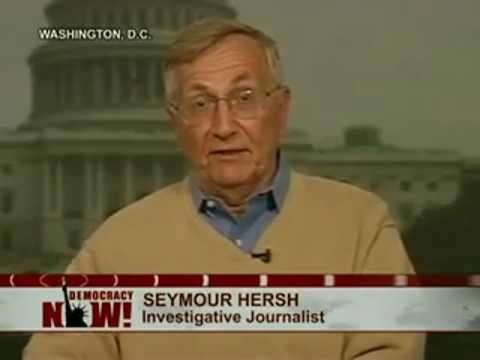
Seymour Hersh on Democracy Now! June 3, 2011

It's been a while since I wrote a blog entry and I haven't yet expressed my opposition to the US-begun and financed "NATO" bombing of Libya.  This is not a popular position, or did not seem so at the time.  Liberals who "love freedom" as well as Arab friends who hate the toppling dictators were aghast at the mere thought of failing to intervene, of relying only on sanctions, letting the internal conflict in Libya follow its own course, rather than taking military action.  This bombing is supposed to be an essential "humanitarian" gesture.  Qaddafi is obviously a crazy dictator.  The rebels wanted outside help.  It has made a difference to them materially and psychologically.  

But opposition to this venture has grown.  There's reason to doubt that the rebels are winning.  There has been collateral damage from the bombings.  There's a move in the Congress to pull out of Iraq, Afghanistan -- and Libya. Libya is a third war, and Obama has overstepped his constitutional bounds in initiating it.  The US economy is stagnant, unemployment is at record highs. Overall, it's time to give up the idea that America is the world's peacekeeper, savior -- and, covertly, ruler.  So there are many reasons for opposing the outside forces' intervention in Libya.  For me, it is simply a violent solution to a violent problem.  The situation in Libya was very bad, but that did not justify intervention.  

From a purely tactical viewpoint, selective bombing to "protect" a rebel movement is dubious and dangerous.  And since that is true, consider this:  How much is the bombing at its roots just a gesture, and therefore incredibly cynical on the part of Sarkozy, Obama, and the other leaders who instigated it?  Obviously all US government actions arise from self interest and there have been long-term regime change plans for Libya in the Pentagon.  In part they arise from a long-nurtured hatred of Qaddafi -- and from anger at having him in control of the country's major oil reserves.  Seymour Hersh recently has noted the "silly" old grudge against him for demanding 20 percent on oil sales when even Saddam Hussein in his heyday only demanded 10 percent.  

Arguments may still go on about whether the Israeli "tail" wags the American "dog," but Hersh's recent New Yorker article focuses, anyway, on how Washington resolutely mis-assesses Iran's nuclear threat.  The most advanced US intelligence sources yet can find no proof of nuclear weapons being built in Iran or of a military threat to North America and yet the government could be poised to go to war on false pretenses just as it did with Iraq in 2003.  This topic might seem a detour from my main subject, but it just illustrates how the US continues to seek fanciful, imperialistic military solutions to what for it are nonexistent problems.  In a Democracy Now! interview inspired by his New Yorker piece Hersh called Obama's war in Afghanistan and Pakistan (it is his now, isn't it?) "A disaster.  Stupid." 

Hersh also says the brutality of the repression in Bahrain is greater than in Syria and a terribly under-reported story, partly no doubt because  of Washington's friendlier relations with Bahrain, long-term chilliness toward Syria.  The same action of popular revolt has produced different results.  Every dictator tries to repress the revolt, but in Tunisia he left the country.  In Egypt he resigned.  In Libya, Yemen, Bahrain, he has kept on fighting.  In all the countries, including Tunisia and Egypt, the remains of the regime have been tenacious and establishing a new democratic government seems like a very long, slow, difficult process, with the outcome uncertain.  Revolutions don't by any means guarantee democracies.  

The cause for hope, as I've been saying, is that the spirit of Tahrir Square, Pearl Roundabout, and the other centers of brave popular revolt will be impossible to crush any time in the future now (and Sy Hersh reiterated that in his Democracy Now! interview).  But the US power to cause trouble reigns over the planet still.  From the perspective of the Middle East, the whole world changed in January 2011.  But some aspects haven't changed at all.  The US has continued to sink as a First World nation and as a world power, but Washington has not adjusted to no longer being the Alpha Dog in every situation.  Keep watching the Arab World:  that perspective will be one of the best ones from which  to observe how much the global power structure is shifting.


NOTE:  On Wed., June 15, 2011 it was reported that a bipartisan group of House lawmakers led by Reps. Dennis Kucinich (D-Ohio) and Walter Jones (R-N.C.) are suing the White House over the use of military force in Libya.